Colours that interact in head
- PRIYANG PRIYADARSHI
- Oct 28, 2021
- 2 min read

Updated: Oct 30, 2021
Colours are standard entities absorbing some and emitting some which results in their perception of difference in colours. As humans, we also see colours perceived differently with respect to the presence of different colours.
Here are some of the examples which shows their perceived differences also known as colour interaction.
There are such interactions between two colours at times when there is...
A) High Contrast B) Similar Approaching Saturation or De-saturation
C) The intensity of light or colour
D) The colour combination
1. The interaction of colours with respect to perfect hues and high intensity....



.... resulting in the differences with perception of colour intensity of the subject, even if they are the same colours. Also, the size difference can be perceived due to high contrast.
2. Analogous colours of the 12 shade colour wheel also has similar colour interaction when places next to each other...


.... resulting in perception of 2 different colours even though they are exactly same.
3. With respect to the colour intensity also, 2 different colours can be perceived similar as shown in the examples below due to a high contrast background.

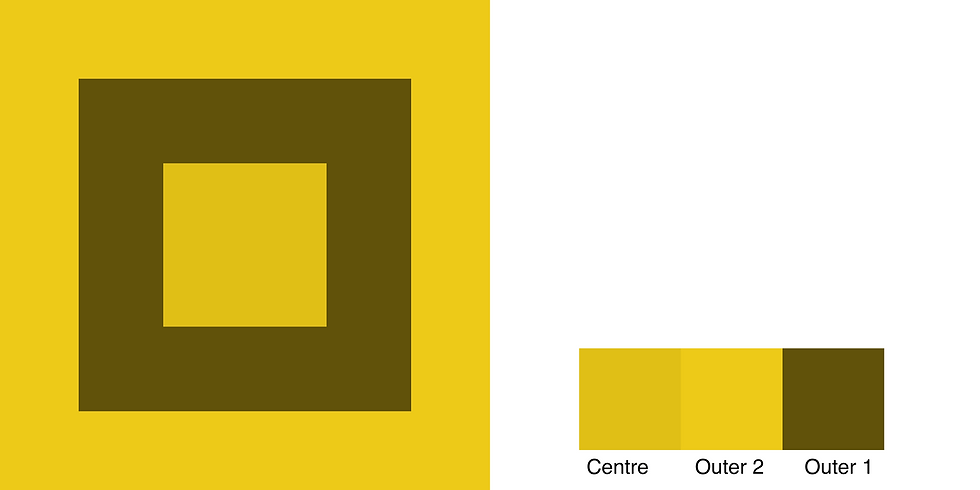

4. In other case the 2 different colours can be perceived similar due to their saturation set too close.


5. Colours are nothing but electromagnetic radiations (energy packets) moving at a certain speed oscillating with certain frequency. And therefore, some colours over power the other and sometimes result in bleeding effect of colours into another.
Examples of colours interacting with light greys and dark greys and with each other when placed next to eachother.
Light Greys


Dark Greys


.... resulting into the bleeding effect of colours intro each other as well as into the light greys and shadows behind the dark greys.
Having the benefit to show things digitally surely gives better understanding of the colours and their interaction as many of the daily interactions now a days happen through 6"AMOLED screens. Although, there is an importance to colour interaction at pigment level as well. The play of pigments while mixing it and their actual interaction makes a big difference in understanding from a digital to the physical world.
Therefore, here are some of the examples I tried based on my understanding of colours being perceived differently by human brain.


And there are some more.
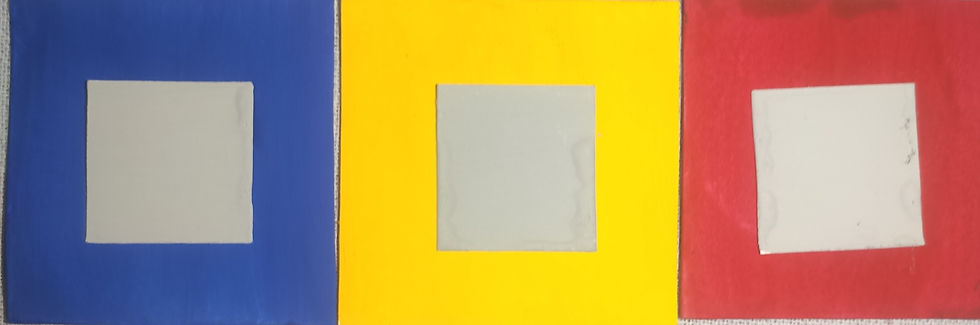


And as it always happens, never forget to have fun with it, so did I.
Some series of explorations expanded.


Really fun exercise.


Comments